KiC Coordinator Florence Reynolds reviews the premiere of a stunning and thought-provoking new documentary.
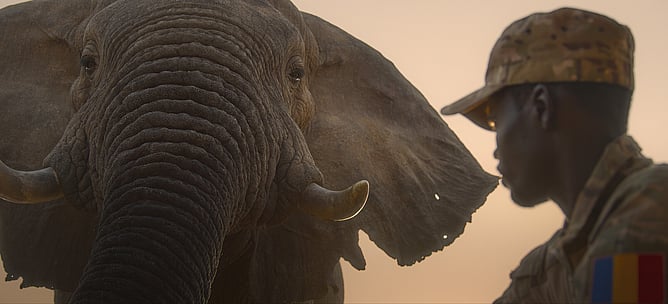
Ranger Abdelkerim Brahim stands with an elephant with bullet hole wounds in its ear in Zakouma National Park, Chad.
It’s not every day that glamour and sustainability go hand‑in‑hand. But in September, several Kiwis members had the privilege of attending the Aotearoa NZ premiere of How to Live on Earth, starring Benedict Cumberbatch.
The hosts, TAHI, created a beautiful, thoughtful premier experience at the Civic Theatre: a green carpet, a photo booth with images uploaded to our virtual tickets, and goodie bags with popcorn and sparkling water waiting on every seat. TAHI is an 800-acre living eco-lab near Pataua North, with 8.8 million trees regenerated, 20 wetlands, luxury accommodation, and several associated eco-brands and products.
Kiwis in Climate members Brad Irwin and Suzan Craig took centre stage, alongside director Fredi Devas (director of Planet Earth II and many other spectacular films), to share why Suzan commissioned the film and to talk through the filmmaking process. The intention behind the film is clear: to spark conversation, and action for a more sustainable future and better lives on earth.
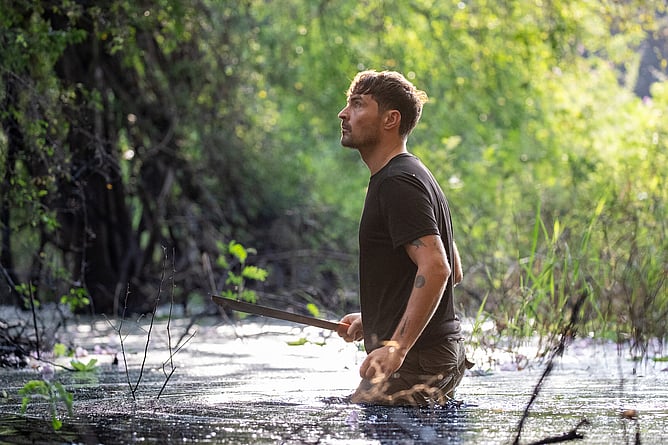
Dan O'Neill walks through the Calakmul Biosphere Reserve, Mexico, documenting the forest's hidden biodiversity.
Incredibly, the film will be made freely available on YouTube. Suzan explained “We had long discussions with Apple, with Amazon, with Disney, and with Netflix. In the end, we chose none of it … No paywall, [the film will be] available for everyone, anywhere… Because the problems that we are facing and very much the solutions that we have do not belong to any one person or to any one organisation, and neither should the film.”
Three mini‑documentaries have also been created for different professional audiences, and the footage will be available for use in not‑for‑profit films. The vision and generosity behind this project is striking: well thought‑out and designed for maximum impact.
Cumberbatch summarises this in the opening scene, explaining “This is the world's greatest how-to video. This is a how-to video with a difference. It’s full of incredible stories, ambition, and hope. It reveals how humankind can become a very positive force if we learn to work with nature - rather than against it. The good news is, we know what to do.”
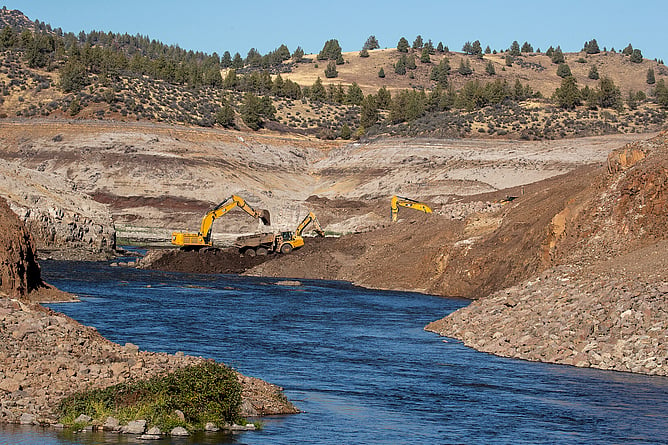
Diggers rebuild the banks of the Klamath River in California, to restore natural flow of the river following the removal of a dam.
I’ve watched a lot of sustainability‑related documentaries over the years. To be honest, I tend to avoid them now. I feel informed enough about the many challenges facing our world, and in my free time, I don’t often seek out more information – or the sadness and hopelessness that can come with it! But this film didn’t leave me with that familiar heaviness.
Instead, I walked away more hopeful. It explores three core questions across three thematic areas, including mental health, food systems, restoration, and finance. My favourite part was the coral reef story – that is a success story I hadn’t heard before, and genuinely made me feel hopeful. I won’t say more here; that would be a spoiler. You’ll have to watch it yourself!
How to Live on Earth is available to watch online now. It is a visually stunning film, so I’d definitely recommend watching it with a good set-up (I know my laptop screen wouldn’t do it justice!) so Kiwis in Climate is looking to host social screenings of the film in the coming months – if you’re interested in one in your area, please get in touch with KiC’s coordinator or your regional lead.
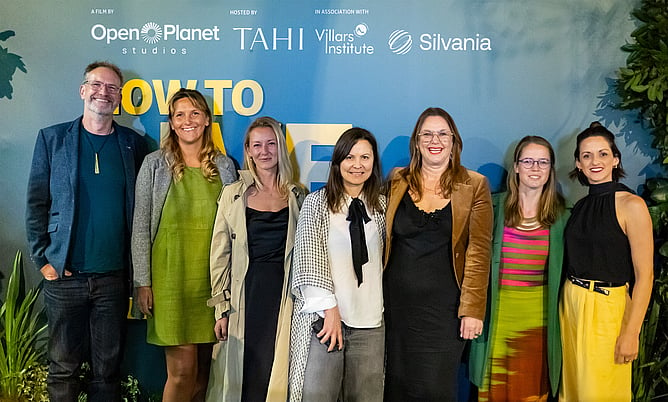
KiC members at the premiere in Tāmaki Makaurau Auckland
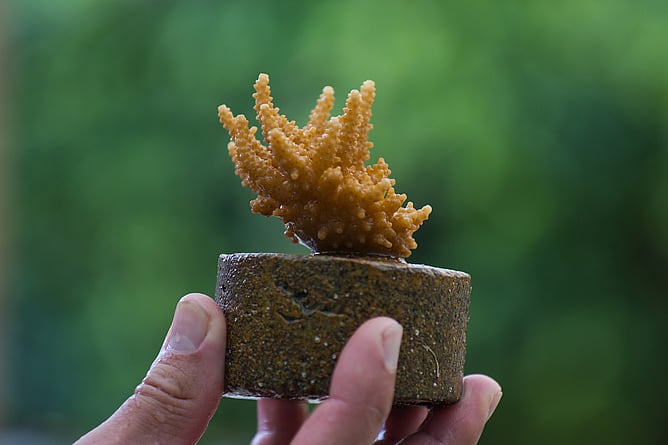
A researcher holds up a coral fragment attached to a cement plug in a laboratory on Kunfunadhoo Island, Maldives