Sue Cardwell takes a look at the launch of Aotearoa's first ever national-scale vision for a better transport future.
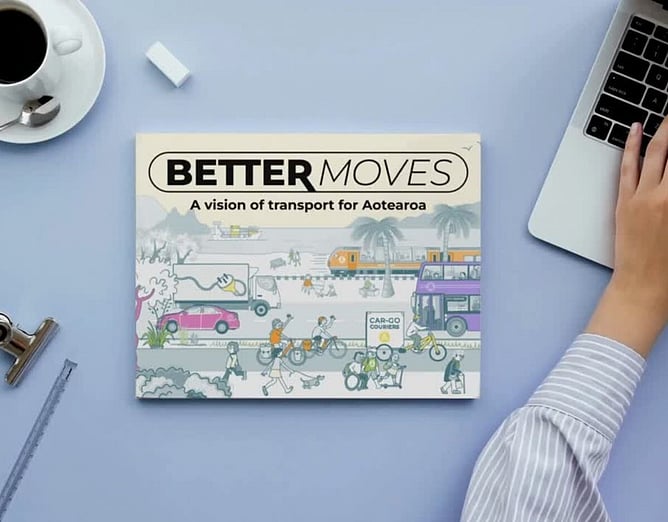
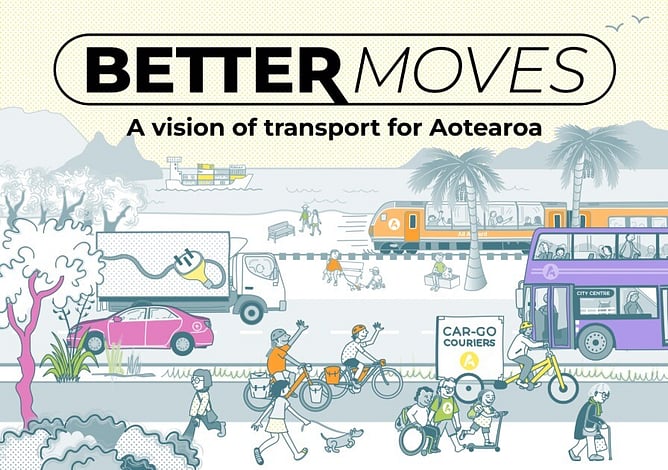
In Aotearoa we think of ourselves as smart people, doing a lot with what we’ve got: we use clever solutions and we stand up for what’s right. Better Moves presents a compelling pathway for that vision of Aotearoa.
It’s the brainchild of All Aboard, a non-profit with the worthy goal of decarbonising Aotearoa’s transport. On 30 September 2026 in Tāmaki Makaurau, All Aboard launched Better Moves, which it describes as Aotearoa's first ever national-scale vision for a better transport future. I had the pleasure of working with All Aboard to help prepare Better Moves for publication.
Transport is Aotearoa New Zealand’s largest source of long-lived CO2 pollution. But not only that. As I explored Better Moves, I grasped for the first time, just how much impact transport systems have on how our lives turn out.
For me, as a mother, it hit home hard. The transport systems Aotearoa puts in place determine whether our children will grow up with clean air to breathe, whether they will run the risk of the diseases associated with a sedentary lifestyle, and whether it’s safe for them to get around independently and grow their confidence in that way.
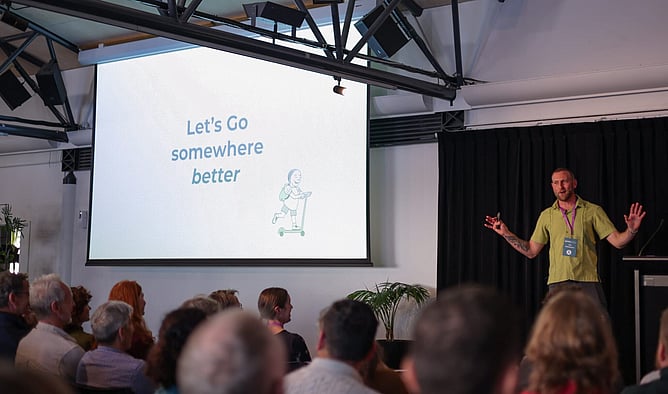
Tim Adriaansen, Executive Director of All Aboard (and one of the KiC Book authors) presents Better Moves in Auckland.
Aotearoa’s transport system puts us to shame
Crucially, it made me realise that the transport choices we are making today are indeed choices, and the outcomes Aotearoa is getting today aren’t set in stone.
Those outcomes are sobering. Highest per capita car ownership in the world. Some of the worst road safety numbers in the OECD. And of course, one of the highest per capita GHG emissions worldwide, much of it from transport. All Aboard knew that better was possible, but they needed the evidence to prove it.
To create Better Moves, All Aboard conducted a meta analysis of the research around what works in transport systems, then modelled four pathways for how we get around, and how we move freight, in the coming 50 years.
Four possible transport pathways
ahead of us
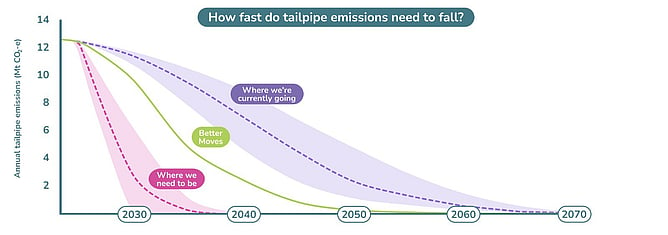
The first three pathways represent different speeds at which electric vehicles enter Aotearoa’s fleet, fast, moderate or slow. The final pathway models something different: 11 interventions to change the transport system so that we can choose to drive less and need fewer vehicles in the first place.
As Tim Adriaansen, Executive Director of All Aboard explains, “Electrification is essential. How we get there matters.” He explains that electrifying Aotearoa’s fleet is a massive job. It’s a lot easier for the country to complete the transition if we need fewer cars.
The Better Moves report lays out this argument with compelling charts. Indeed, even the fastest possible rate of electrification imaginable can’t deliver benefits as quickly as the Better Moves package of interventions.
The forced subscription of car ownership
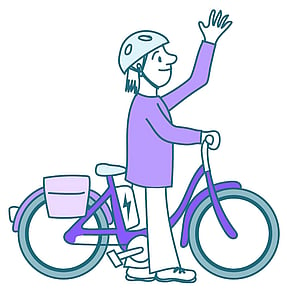
But I need my car! I hear you protest. And you’re probably right. Adriaansen describes this as the forced subscription of car ownership. When we need to own cars just to participate in everyday life, we take on an enormous recurring bill: buying and replacing vehicles, then insuring, maintaining, parking and powering them year after year.
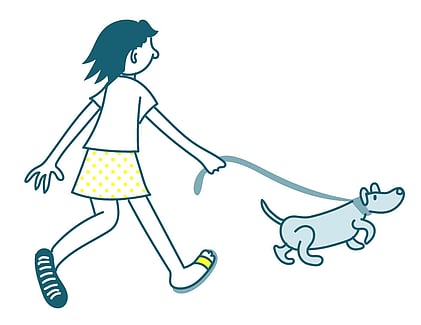
What if we made the other modes of transport a whole lot better? With attractive options for walking, biking and public transport, many households wouldn’t need as many, if any, cars. This is a key premise of the Better Moves interventions.
The 11 interventions
The interesting thing about the Better Moves interventions is that they aren’t rocket science. They include things like making optimal use of our existing rail network for passengers and freight, costing transport modes more fairly, and using more of our street space for walking and wheeling.
None of the interventions relies on technology which hasn’t been invented yet. None of them involve a major infrastructure project. They may even seem like no-brainers.
But we shouldn’t underestimate what’s been created in Better Moves. All Aboard systematically dismantles myths about transport through the report. It has tested and modelled all the interventions for which we have research, and presented us with a package of the ones which are proven to work.
A trillion dollar opportunity
I’m excited by the scope of Better Moves. It covers not only the movement of people but also freight. It models the pathways not only by the emissions they’ll avoid, but also, crucially, by the dollars they will save us. And that number is perhaps the most eye-opening in the whole report: over a trillion in economic benefits. As All Aboard puts it, “We can build the public transport, cycling networks, regional connections, safer streets and other improvements described in Better Moves — and still use fewer economic resources overall.”
We’d be crazy not to.
So why aren’t we doing it already?
The biggest barriers
As the report states: “the biggest barriers to a better transport future aren't technological. They're social and institutional.” In other words, we know what to do and how to do it, but we haven’t been investing in the social transition needed to enable the transport system to change.
Adriaansen uses the analogy of enabling works - the preparatory tasks completed on a site before the main construction can begin. Better Moves lists key areas of enabling works - community understanding, relationships and shared vision is a key one. It also calls on political leadership, institutional stewardship, and professional capability building.
How you can help
As All Aboard continues to travel around the motu sharing Better Moves with those who need to hear it, I encourage you to read the Better Moves report (it’s an enjoyable read, I promise!). And if you think this work matters, please consider supporting it. That could mean spreading the word, providing in-kind support for the work ahead, making connections with funders, or simply sending a note of encouragement - it all helps.
In the words of the Better Moves report, let’s go somewhere better!
Illustrations by Carol Green